I. The Scale of Destruction
The 2024 Israel-Lebanon conflict inflicted damage on a scale that Lebanon's economy simply cannot absorb through traditional recovery mechanisms. According to the World Bank's Rapid Damage and Needs Assessment (RDNA), completed in March 2025, reconstruction and recovery needs total $11 billion. When economic losses—lost livelihoods, disrupted supply chains, foregone revenue—are included, the total economic cost reaches $14 billion ($6.8 billion in physical damage and $7.2 billion in economic losses).
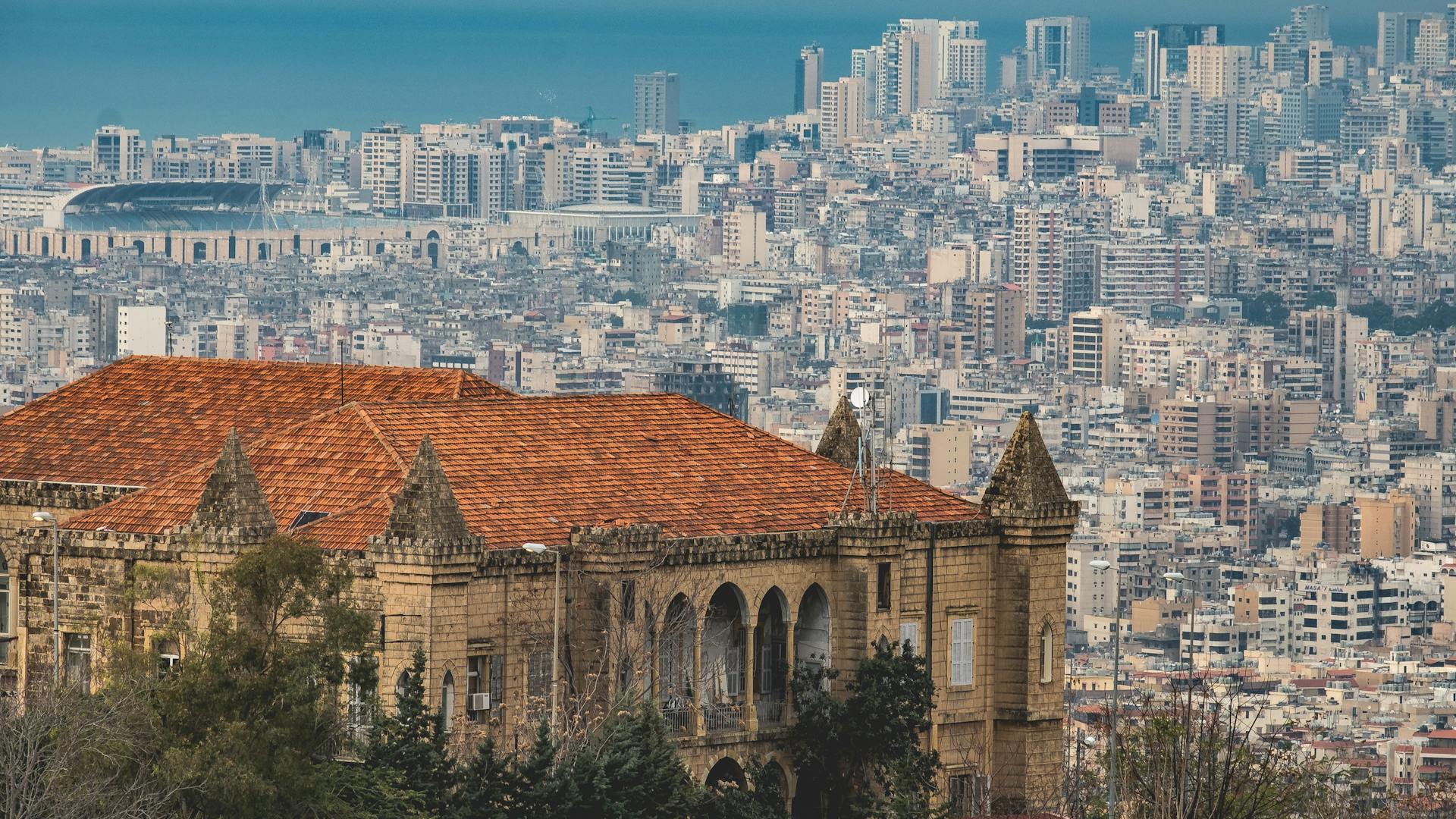
The housing sector bore the most concentrated damage, with reconstruction needs reaching $4.6 billion—approximately 42% of the total physical loss. In Dahiyeh, the densely populated southern suburbs of Beirut where 700,000 residents lived before the conflict, the destruction achieved a concentration rarely seen in modern urban warfare. Local assessments documented hundreds of fully destroyed buildings and well over a thousand damaged structures across Dahiyeh alone. The volume of debris and rubble generated far exceeds that of the 2006 war.
Lebanon's cumulative economic contraction since 2019 now exceeds 40%. The country is not recovering from this latest conflict within an existing growth trajectory—it is attempting to rebuild while still in freefall from the previous collapse. GDP per capita has declined by more than 50% since 2018. Currency reserves have been depleted to critically low levels. The question is no longer whether Lebanon can recover, but how.
II. Why Traditional Reconstruction Will Fail
The World Bank's assessment concludes that $6-8 billion must come from private capital sources. Government can realistically contribute only $3-5 billion for basic infrastructure and public services. This is the central insight that unlocks the private sector opportunity: the reconstruction gap is real and structural. It cannot be closed through government borrowing, which is impossible given Lebanon's debt burden and currency crisis.
Traditional capital sources for reconstruction are each broken:
Residents and local savings. Lebanon's 2019 banking crisis froze the bulk of household deposits in the banking system. Residents have zero access to these savings. Currency controls and capital restrictions prevent even those with access to dollars from deploying them productively. Residents who lost homes have no savings left and cannot access mortgages—no functioning mortgage market exists in Lebanon. They have land (often with clear legal title in central areas), but zero capital to rebuild. The emotional devastation of home loss compounds the financial reality: residents need housing, not speculation. They will accept a reconstructed apartment at equivalent size with modern standards, clear title, and zero personal capital requirement.
Government finance. Lebanon defaulted on roughly $31 billion in sovereign Eurobonds in 2020 and remains locked out of capital markets, against a collapsing GDP. The World Bank classified Lebanon as one of only three countries globally experiencing a financial crisis of comparable severity to the worst periods in the 19th century. The government is technically insolvent and cannot borrow on commercial terms. Government reconstruction budgets depend entirely on external aid, which comes with political conditions and disburses slowly. The Lebanese government has defaulted on its sovereign debt, lost access to capital markets, and faces chronic currency instability. Even if parliament passes a reconstruction budget, implementation requires both central bank support (which is minimal) and donor coordination that is politically fraught. Expecting government-led reconstruction at scale is unrealistic.
International donors. Donor attention follows a predictable arc: peak immediately after crisis, then decay exponentially over 18-24 months. This was the 2006 pattern and it will repeat. Moreover, the United States has explicitly conditioned reconstruction support on Hezbollah disarmament—a political condition that creates profound uncertainty about capital deployment. Donors pledge sums that look impressive at pledging conferences, but actual disbursement rates historically hover around 30-40% of pledges, and then only over 5-7 years. A $10 billion donor pledge translates to roughly $3-4 billion actually deployed, spread across a decade. Waiting for donor capital is not reconstruction—it is managed paralysis.
Banking system. Lebanon's banking sector is structurally paralyzed. With capital controls and currency instability, no bank will provide construction financing. Project loans do not exist. Credit lines do not exist. Letters of guarantee cannot be secured. The banking system is not a source of capital for reconstruction—it is an obstacle to it. The Lebanese pound has lost 99% of its value against the dollar. Banks cannot take currency risk and will not lend in local currency when the currency is depreciating in real time. Expecting the banking system to intermediate reconstruction capital is fantasy.
The 2006 precedent. Hezbollah's Wa'ad program, backed by Iranian funding, was presented as a reconstruction model. It was slow, politically dependent, and relied on external flows that are no longer available. More importantly, Hezbollah's own financial and reconstruction capacity has been dramatically diminished by recent conflicts and international sanctions. At the pace of 2006 reconstruction, the 2024 damage would not be resolved until the mid-2030s. The diaspora—and the international investment community—will not wait a decade for reconstruction. The question is not whether reconstruction is politically contentious (it is), but whether private capital mechanisms can work despite political contention. The answer is yes, because private capital is indifferent to political theater as long as projects are ring-fenced and executed.
"The reconstruction gap is real and structural. It cannot be closed through government borrowing. The World Bank assessment concludes $6-8 billion must come from private capital sources."
None of these traditional sources can deliver the reconstruction capital required. This is not a temporary constraint—it is structural and will persist for years. The private sector model emerges not as an ideological preference, but as the only mechanism available to deploy capital at scale. When all traditional sources are broken, non-traditional sources move from margin to center.
III. The Private Sector Model: Consolidation Through SPVs
The mechanism that works is consolidation through Special Purpose Vehicles (SPVs). The model is elegant precisely because it aligns incentives without requiring government action:
Residents contribute land rights. A resident in Dahiyeh whose building was destroyed contributes the land and property rights (zero cash cost). The SPV commits to rebuild an equivalent unit (80 square meters for an 80 square meter original unit), with modern construction standards and legal title to a new apartment. The resident bears zero reconstruction cost and receives guaranteed housing.
Developers contribute construction capacity. A developer brings project management, construction expertise, and execution capability. Critically, the developer contributes zero land acquisition cost (it comes from residents) and zero equity capital (it comes from institutional investors). The developer's return comes from a guaranteed development fee (typically 10-15% of construction cost) plus a margin created by density uplift.
Public authorities approve density uplift. The government authority (municipality, with national oversight) approves a density uplift on the site—increasing the buildable area beyond base zoning allowances. This density uplift creates the economic margin that makes reconstruction feasible. For example, on a 18,000 square meter site with 6 buildings and 120 families: 9,600 square meters is allocated to resident housing (80 sqm × 120 units), leaving 8,400 square meters of additional developable area that becomes developer upside.
Investors provide equity capital. Institutional investors (diaspora funds, international real estate investors, family offices) provide the equity capital. They receive preferred returns calculated against a development IRR. With construction costs of $700/sqm × 18,000 sqm = $12.6 million in construction spend, the economics work as follows:
At base zoning (no density uplift), the construction cost of $12.6 million breaks even against a guaranteed 12% developer fee ($1.5 million) plus standard project overhead. With a 35% density uplift, an additional $3.675 million in net margin is created (29%). With a 50% uplift, the margin reaches $5.25 million (42% gross margin). These are genuine investment returns created by the reconstruction activity itself, not by speculative appreciation or financial engineering.
The model scales because it has no single failure point. If government delays permitting, the project is ring-fenced as an SPV and other projects proceed. If international capital dries up, resident need for housing remains constant. If developers underperform, the equity capital provider retains rights to hire alternative execution partners. The mechanism creates redundancy and aligns stakeholder incentives at every step.
IV. The Investment Case
Lebanon's diaspora sends $6.8 billion in annual remittances (2024) home—money earned globally, denominated in stable currencies, and psychologically tied to the country. This is capital waiting for a productive vehicle. The diaspora also includes significant numbers of engineers, architects, project managers, and real estate professionals who understand both Lebanese conditions and international standards. A reconstruction vehicle taps directly into both capital and expertise that exist nowhere else for this particular market. The diaspora is not just a source of capital—it is a source of operational capability. A Beirut-based Lebanese-American engineer who manages projects in Dubai can oversee a reconstruction project in Lebanon with full understanding of local constraints and international standards.
Construction costs in Lebanon range from $400-700 per square meter when land is contributed rather than acquired. This is substantially below replacement cost in comparable Mediterranean markets (Greece: $800-1,200/sqm; Turkey: $600-900/sqm). The cost advantage is real and structural, created by lower labor costs and the high density of skilled construction workers in the Lebanese diaspora who return for projects. Labor productivity in Lebanese construction is high precisely because the worker pool includes returned diaspora who have worked on Gulf projects and bring best practices back. Material costs are comparable to regional markets when sourced efficiently.
The investment case rests on four pillars:
Genuine alignment of incentives. Residents get homes they cannot otherwise rebuild. Developers get project flow without land acquisition risk. Investors get returns calibrated to risk (preferred returns of 8-12%, equity upside above that). Public authorities get rebuilt neighborhoods without capital expenditure, reducing pressure on government budgets. Every stakeholder's success depends on project completion, creating mutual accountability. This is not charity disguised as investment—it is genuine, hard-headed alignment of commercial interests.
Preferable pricing relative to risk. Construction returns of 15-25% IRR on $12.6 million projects, scaled to 50+ projects = $600+ million deployed. These returns are available precisely because the crisis is real and most capital is still risk-off. Global capital recognizes crisis-driven opportunities but historically extracts only 15-18% returns. Lebanon offers 20-25% because the perceived risk is higher. But perceived risk and actual risk are not the same. A ring-fenced SPV structure with clear legal title, completed construction, and rental revenue flow carries materially lower actual risk than the perception suggests. The window closes as markets stabilize. First-mover advantage in reconstruction is structural—the developer who executes the first three projects defines the reconstruction landscape and capture follow-on projects at lower cost of capital.
Complementary public investment. The World Bank's $250 million LEAP (Lebanon Emergency Assistance Project) creates complementary infrastructure that supports housing consolidation projects. Road access, waste management, and utilities are being funded in parallel. This dramatically improves project IRRs and de-risks execution. A housing reconstruction project that fronts infrastructure cost carries lower returns. A project that benefits from parallel World Bank funding of roads and utilities can return incremental 3-5% to equity. This is material.
Currency stabilization and external support. Through 2024–2025 the USD/LBP rate stabilized at around 89,500 per USD after years of freefall. The renewed conflict in 2026 has, however, reintroduced volatility and pressure on this peg. Capital can be deployed with reasonable visibility on deployment costs and return currencies. This was not true in 2020-2023. Additionally, the IMF is actively engaged with Lebanon on a reform program. IMF engagement, while always contentious politically, creates structural incentives for currency and fiscal discipline that make dollar-denominated project returns more defensible.
| Density Uplift | Additional GFA | Additional Revenue | Net Margin | Margin % |
|---|---|---|---|---|
| Base (0%) | - | $0 | $0 (Break-even) | - |
| 20% Uplift | 3,600 sqm | $2.52M | $1.89M | 15% |
| 35% Uplift | 6,300 sqm | $4.41M | $3.675M | 29% |
| 50% Uplift | 9,000 sqm | $6.30M | $5.25M | 42% |
V. The Risks
The risks are material and must not be minimized: political instability remains endemic to Lebanese governance; security escalation resumed in March 2026 and could re-escalate; regulatory frameworks are unpredictable and subject to sudden change; title verification across 60+ years of Lebanese administrative chaos is complex and expensive; construction cost inflation is persistent; and execution risk on the developer side is real and substantial. Lebanon is not a market for capital that requires certainty.
The security risk deserves particular attention. The March 2026 escalation reminded markets that ceasefire agreements in Lebanon are temporary equilibria, not permanent outcomes. A resumption of conflict would pause reconstruction, strand deployed capital, and force capital providers to write down positions. This is not theoretical—it is a demonstrated historical pattern. But it is also a risk that is explicitly priced into returns. The 20-25% IRR reflects probability-weighted expected returns inclusive of conflict scenario analysis. Investors are not betting against re-escalation; they are being compensated for the risk that it occurs.
Regulatory risk is also real. Density approvals by municipal authorities can be reversed if political coalitions shift. Title verification in Dahiyeh, where buildings have changed hands multiple times over decades, requires extensive due diligence. Zoning changes can create legal ambiguity. These are operational risks that a developer must manage through political relationships, legal expertise, and project structure. They are not reasons to avoid the market; they are reasons to structure investments with proper legal and political risk management.
But—and this is critical—these risks are exactly why returns are available. A reconstruction opportunity in Switzerland or Singapore would trade at 4-6% IRR. The same opportunity in Lebanon trades at 15-25% IRR specifically because these risks exist. The market is pricing risk accurately. Investors entering this market are doing so with clear eyes about volatility. The SPV structure ring-fences risk per project so that execution failure in one asset does not cascade across the portfolio. A 20-project portfolio reduces idiosyncratic risk substantially while maintaining exposure to systematic Lebanon risk (which carries the return premium).
VI. Conclusion: The Reconstruction Window
Lebanon's reconstruction will happen. The question is whether it happens through political patronage networks, government directives, and slow international aid deployment—which is the current default path and is failing—or through private capital mechanisms that align incentives and mobilize the capital that actually exists (diaspora savings, international institutional capital, developer equity).
The 2006 precedent shows that reconstruction can take a decade at slow pace, leaving neighborhoods in a state of half-repair and psychological limbo. Lebanon cannot afford that outcome. The diaspora cannot afford to wait. The residents cannot afford to wait. The developers cannot afford to wait.
The conditions for private-sector-led reconstruction are structurally sound: capital need is real and verified ($11B), traditional funding sources are exhausted, the SPV mechanism works operationally, and pricing is available to compensate for genuine risks. This is not charity. This is not reconstruction theater. This is a genuine investment opportunity created by crisis.
Once the security situation stabilizes, the window will be measured in months, not years. The first developer to move creates the model. The second and third developers replicate it with lower execution risk. By year two, reconstruction momentum builds on itself. The window closes as risk premiums decay and capital that was willing to accept 25% IRR retreats to 10% IRR. First-mover advantage in reconstruction is not marginal—it is structural.